
Dynamic QR Platform
Create QR codes Instantly
Website URL
Send users to any webpage
Website URL
Website URL
Send users to any webpage
Wi-Fi
Let users connect instantly
Wi-Fi
Wi-Fi
Let users connect instantly
Menu
Create a digital menu
Menu
Menu
Create a digital menu
Start a chat with one tap
Start a chat with one tap
Image
Showcase visuals
Image
Image
Showcase visuals
Show a downloadable file
Show a downloadable file
20 Aug 2026 • 9 min read
QR Codes for Restaurants to Launch Loyalty Programs and Reorder Flows
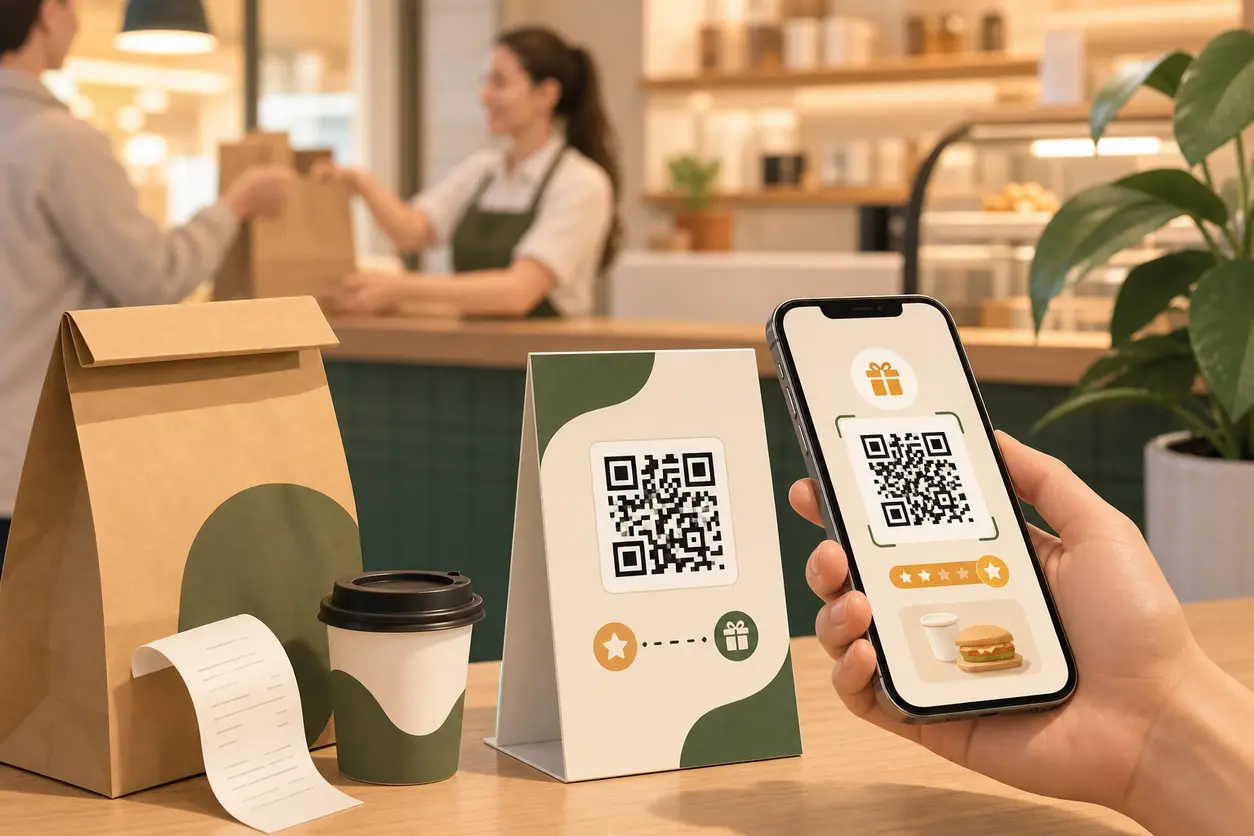
A practical guide for restaurants, cafes, and quick-service brands using restaurant loyalty QR codes on receipts, takeout bags, counter signage, and tabletop displays to grow loyalty enrollment, drive repeat orders, capture first-party data, and measure participation by location with dynamic QR code tracking.
IntroductionWhy restaurant loyalty QR codes are a strong retention playThe best places to use restaurant loyalty QR codesWhat restaurant loyalty QR codes should link toWhy dynamic QR codes are the better choice for restaurantsHow to track loyalty participation by location and placementA simple rollout plan for restaurantsCommon mistakes to avoidWhat to look for in a QR platform for restaurant retention campaignsThe best restaurant loyalty QR strategy is simple and specificFAQ
That is where restaurant loyalty QR codes work especially well.
Instead of treating QR codes as menu links alone, restaurants can use them as retention tools across dine-in, takeout, pickup, and delivery touchpoints. A single scan can send a guest to a rewards sign-up page, a one-tap reorder flow, a limited-time offer, or an SMS opt-in that turns a one-time order into an owned customer relationship.
For independent restaurants, cafes, and quick-service brands, the value is simple: QR codes meet customers in the moment right after purchase, while the experience is still fresh and the next order is easiest to influence.
With QR Rapid, you can create dynamic QR codes for each placement, update promotions without reprinting, and track which locations and touchpoints actually drive scans and loyalty participation.
Why restaurant loyalty QR codes are a strong retention play
Restaurants have multiple physical moments where a customer is already engaged:
- holding a printed receipt
- carrying a takeout bag home
- waiting at the counter
- sitting at a table
- opening a delivery package
Those moments are ideal for low-friction next steps. Instead of asking guests to remember a website or download an app later, the QR code brings the action into the present.
A good loyalty QR workflow does four things well:
- Makes the next step obvious with a clear call to action
- Sends users to a mobile-first destination built for fast completion
- Captures first-party data such as email, phone number, or preference data
- Creates a reason to come back through rewards, reorder convenience, or exclusive offers
This is also what makes the use case different from QR codes for restaurants or review QR campaigns. The goal here is not information access or reputation management. It is retention.
The best places to use restaurant loyalty QR codes
The smartest restaurant setups use separate QR codes for separate placements. That gives you cleaner tracking, clearer intent, and more control over messaging.
1. Receipts
Receipts are one of the strongest placements because they reach nearly every paying customer.
Best uses:
- Join rewards and earn a welcome offer
- Save your favorite order for next time
- Get a bounce-back offer valid for the next visit
- Opt in to SMS for reorder reminders or weekly specials
Example CTA:
- Scan to join rewards and unlock your next perk
- Scan to reorder this meal in under a minute
- Scan for text-only offers
Receipt QR codes work best when they are tied to a short landing page, not a homepage. If a guest scans and lands on your full website, they have too many paths and the conversion rate drops.
2. Takeout bags and packaging stickers
Takeout packaging reaches guests after they leave, which makes it ideal for reorder flows.
Best uses:
- Reorder your last meal
- Join our rewards club
- Claim a next-order offer
- Subscribe for SMS lunch or dinner alerts
This is especially useful for quick-service brands and high-frequency concepts like pizza, bowls, coffee, sandwiches, and dessert shops. The customer is already taking your brand home. Packaging QR codes give you a direct way to convert that purchase into another one.
A strong setup is to use one dynamic QR code on the bag that can rotate between a loyalty join page on weekdays and a weekend family bundle offer later without changing the print.
3. Counter signs and pickup shelves
Counter signage is best for customers who are waiting for an order or deciding whether to return.
Best uses:
- Join the loyalty program while you wait
- Get a free add-on after sign-up
- Text to get notified about rotating specials
- Start a direct order account for faster future checkout
This placement works well because there is dwell time. Customers are standing there anyway. A QR code gives them something useful to do that benefits both them and the restaurant.
4. Tabletop displays
Tabletops are useful for dine-in loyalty enrollment and visit-frequency offers, but the message needs to be retention-focused to avoid overlapping with menu use cases.
Best uses:
- Join rewards before you leave
- Get points for this visit
- Unlock a dessert or drink on your next order
- Join SMS for happy hour or weekday promos
A tabletop QR should not try to do everything at once. If the same table display already contains a menu or review CTA, create a separate loyalty QR with a separate action. One code, one outcome.
What restaurant loyalty QR codes should link to
The destination matters more than the code itself. If the page is confusing, slow, or asks for too much information, scans will not turn into sign-ups.
Reward sign-up pages
This is the core use case. Send guests to a short mobile page that asks only for the information you truly need to start the relationship.
Good fields to collect:
- first name
- email address
- mobile number if SMS is part of the program
- birthday month if you plan birthday offers
- favorite location or order type if helpful for segmentation
Keep the incentive specific. "Join our rewards program" is weaker than "Join rewards and unlock your next-visit perk."
Reorder pages
For takeout and QSR concepts, reorder may convert better than a broad loyalty pitch. Some customers care less about points and more about convenience.
A reorder QR can link to:
- a direct online ordering page
- a category page for popular items
- a location-specific ordering destination
- a landing page with top repeat items and a reorder CTA
A practical strategy is to pair reorder with loyalty: the landing page opens with "Reorder in a tap" and includes a secondary rewards join prompt below.
Special offers
Offer-driven QR codes are useful when you want to move behavior fast.
Examples:
- weekday lunch offer
- slow-day traffic promo
- second-visit discount
- limited-time loyalty bonus for new sign-ups
Dynamic QR codes are especially useful here because the same printed code can point to a different promotion later. That means your counter cards or bag inserts stay usable even when campaigns change.
SMS opt-in pages
SMS is powerful for restaurants because it matches short decision cycles. A customer may decide where to order dinner in minutes, not days.
A QR code can send guests to:
- a simple form for text club sign-up
- an SMS QR code that opens a prefilled text message
- a landing page explaining what subscribers will receive
The key is expectation-setting. Tell customers what they are signing up for, such as weekly deals, early access, or reorder reminders, and make opt-in language clear.
Why dynamic QR codes are the better choice for restaurants
Static QR codes can work for permanent links, but loyalty and reorder campaigns rarely stay fixed.
Promotions change. Ordering platforms change. Landing pages change. Locations run different offers. Seasonal items come and go.
That is why dynamic QR codes are usually the right fit for restaurant loyalty QR codes. If you want a deeper comparison, the guide on Dynamic vs Static QR Codes explains why flexible redirects matter so much for ongoing campaigns.
With dynamic codes, you can:
- change the destination without reprinting receipts, stickers, or signs
- swap a generic sign-up page for a location-specific promo
- pause an expired offer and redirect scans to a current one
- test different landing pages for dine-in versus takeout
- keep the same printed code while improving the campaign behind it
In QR Rapid, this matters because restaurants often have small print runs spread across multiple placements. Reprinting bag stickers or tabletop cards every time an offer changes creates unnecessary cost and operational friction.
How to track loyalty participation by location and placement
Tracking is where many restaurants miss the real value.
If you use one QR code everywhere, you will know that people scanned, but you will not know what actually worked.
Instead, create separate dynamic QR codes for:
- each location
- each placement type
- each campaign or offer
For example:
- Downtown receipt QR
- Downtown takeout bag QR
- Midtown counter sign QR
- Midtown tabletop QR
That structure helps you answer useful questions:
- Which location drives the most loyalty sign-ups?
- Do receipts or bags create more reorders?
- Does an SMS CTA outperform a points CTA at lunch-focused stores?
- Which offer works better for dine-in versus pickup customers?
QR Rapid makes this easier because you can manage codes centrally while keeping campaign-level tracking clean. For hospitality marketers managing several units, that means less guesswork and fewer one-size-fits-all assumptions.
A simple rollout plan for restaurants
You do not need a huge program to start. A focused rollout is usually better.
Phase 1: Launch one sign-up flow and one reorder flow
Start with:
- one loyalty landing page
- one reorder destination
- one QR code for receipts
- one QR code for takeout bags
This gives you coverage across both in-store and off-premise orders.
Phase 2: Add SMS capture
Once the initial flows are live, add an SMS opt-in offer for the placements with the best scan volume. This gives you a faster-owned re-engagement channel.
Phase 3: Split by location
If you operate more than one store, clone the campaigns and assign separate dynamic QR codes by location. Keep the creative similar so the comparison is clean.
Phase 4: Rotate promotions without reprinting
Use dynamic redirects to refresh slow performers. For example, a generic sign-up page on the bag may become a second-order offer for two weeks, then return to a rewards page later.
Common mistakes to avoid
Sending scans to your homepage
A homepage adds friction. Use a dedicated landing page built for one action.
Putting too many goals behind one code
If the code says join rewards, do not bury the CTA under menu links, careers, and social icons.
Using the same code everywhere
You lose placement and location data. Separate codes create clearer insight.
Asking for too much information
Long forms hurt completion. Start with the minimum data needed to create value.
Forgetting the on-print CTA
Customers need a reason to scan. "Scan me" is weak. "Scan to join rewards and unlock your next visit perk" is stronger and clearer.
What to look for in a QR platform for restaurant retention campaigns
If loyalty and reorder are the goal, choose a platform that supports more than basic code generation.
Important capabilities include:
- dynamic QR codes for changing offers without reprints
- landing page support for mobile-first sign-up flows
- SMS QR options or SMS-friendly destinations
- analytics by code so you can compare locations and placements
- easy management for multiple live campaigns at once
- design controls for branded, scannable codes and signage
QR Rapid fits this workflow well because it lets restaurants create, customize, update, and track QR codes across the exact physical touchpoints where repeat business starts.
The best restaurant loyalty QR strategy is simple and specific
The most effective retention campaigns usually do not start with a huge app rollout or a complicated loyalty architecture. They start with a clear next step at the right moment.
A guest finishes an order.
They scan the receipt to join rewards.
They scan the bag next week to reorder.
They opt in for text offers at pickup.
Now the restaurant has something more valuable than a single transaction: a direct path to the next one.
If you want to build that system without constant reprinting or guesswork, QR Rapid gives you the tools to launch dynamic, trackable restaurant loyalty QR codes for receipts, packaging, signs, and table displays.
Start with two placements, one incentive, and separate tracking by location. That is enough to turn QR codes from a convenience feature into a retention channel.
FAQ
Where should restaurants place loyalty QR codes for the best results?
The strongest placements are receipts, takeout bags, counter signs, pickup shelves, and tabletop displays. Each placement serves a different retention goal, so use separate QR codes for clearer tracking.
What should a restaurant loyalty QR code link to?
It should link to a short mobile-first destination such as a rewards sign-up page, reorder page, special offer landing page, or SMS opt-in form. Avoid sending scans to a generic homepage.
Why are dynamic QR codes better than static QR codes for restaurant loyalty campaigns?
Dynamic QR codes let you change the destination without reprinting bags, signs, or receipts. That makes it easy to rotate offers, update ordering links, and tailor promotions by location.
Can restaurant loyalty QR codes help with first-party data collection?
Yes. They can send guests to forms that collect email addresses, mobile numbers, birthday details, or location preferences with customer consent, giving restaurants a direct relationship outside third-party platforms.
How can multi-location restaurants track loyalty QR code performance?
Create separate QR codes by location and by placement type, such as one for receipts and one for takeout bags at each store. This helps compare scan activity and loyalty participation across locations.
Should restaurants use one QR code for loyalty, reviews, and menus together?
Usually no. One QR code should support one main action. Separate loyalty QR codes from menu or review campaigns so the customer sees a clear CTA and you can measure performance more accurately.
Similar Blogs
The latest industry news, interviews, technologies, and resources.
 September 14, 2026
QR Codes for Loyalty Program Sign-Ups: A Measurable Offline-to-Member Workflow
QR Codes for Loyalty Program Sign-Ups: A Measurable Offline-to-Member Workflow
Read post
 August 19, 2026
QR Codes for Real Estate Sign Riders to Capture Drive-By Leads
QR Codes for Real Estate Sign Riders to Capture Drive-By Leads
Read post
Join 2,000+ subscribers
Stay in the loop with everything you need to know.
We care about your data in our privacy policy