
Dynamic QR Platform
Create QR codes Instantly
Website URL
Send users to any webpage
Website URL
Website URL
Send users to any webpage
Wi-Fi
Let users connect instantly
Wi-Fi
Wi-Fi
Let users connect instantly
Menu
Create a digital menu
Menu
Menu
Create a digital menu
Start a chat with one tap
Start a chat with one tap
Image
Showcase visuals
Image
Image
Showcase visuals
Show a downloadable file
Show a downloadable file
18 Jun 2026 • 10 min read
QR Codes for Open Houses: Capture Buyer Leads and Share Property Details Instantly
Learn how real estate teams can use an open house QR code on signs, flyers, and listing sheets to share property details, collect buyer leads, and track scans by property or event.
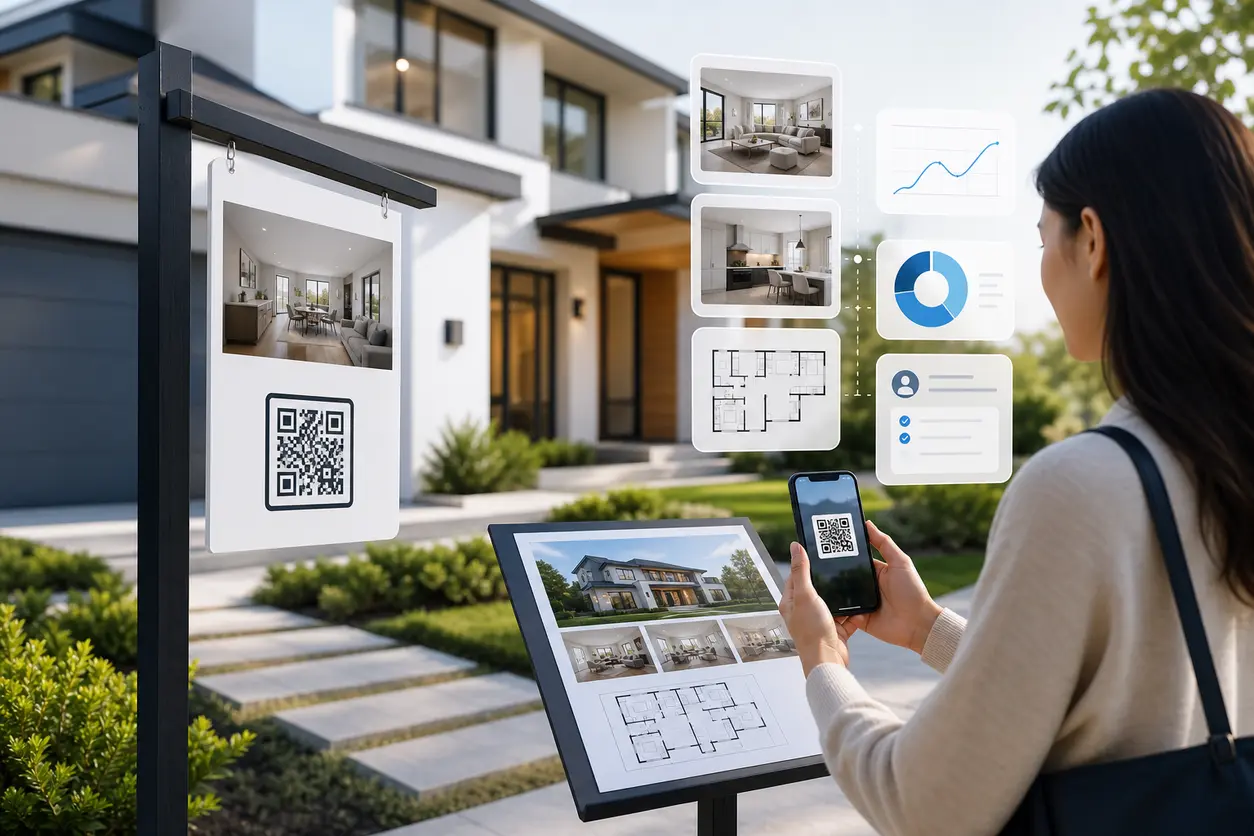
IntroductionTurn your open house materials into a measurable listing funnelFAQWhy an open house QR code works so wellWhat buyers expect when they scan at an open houseBest places to use an open house QR codeWhat to include on the landing pageA simple open house QR lead workflowStatic vs dynamic QR codes for real estateHow dynamic QR codes help after a listing changes or sellsReal estate-specific setup tips that improve conversionA sample open house QR campaignWhat to look for in an open house QR code tool
- scan tracking
- easy campaign naming and organization
- support for landing pages, PDFs, images, and video links
- simple code management across multiple listings
- clean customization for branded print materials
QR Rapid is a strong fit because it matches how real estate teams actually work: listings change, campaigns move quickly, and printed materials need to keep performing after they are distributed.
Turn your open house materials into a measurable listing funnel
A good open house QR code does more than share a brochure online. It turns signs, flyers, and listing sheets into a lead engine.
The winning setup is simple:
- place codes where buyers naturally pause
- send every scan to a mobile-friendly property page
- include the assets buyers want most
- capture follow-up intent with a clear CTA
- use dynamic QR codes so the campaign stays flexible
- track scans by property or event so you can improve results
If your team is still relying on untracked flyers and generic listing links, this is one of the easiest upgrades to make.
With QR Rapid, you can create dynamic QR codes for each property, update destinations as listings change, and track which open house materials actually drive buyer interest. That gives your print marketing a job beyond visibility: generating measurable next steps, especially when paired with a multi-link QR code for sharing multiple property resources in one scan.
Start with one listing, one landing page, and one open house. Once the workflow is in place, it is easy to scale across your entire real estate pipeline.
FAQ
What should an open house QR code link to?
It should usually link to a mobile-friendly property landing page with listing details, photos, floor plans, a virtual tour, and a clear contact or showing request form.
Should I use one QR code for the whole property or different codes for each placement?
Use one code if you want simple setup. Use separate codes for yard signs, flyers, and entry signage if you want to track which placement drives the most scans and leads.
Why is a dynamic open house QR code better than a static one?
A dynamic code lets you change the destination after printing, which is useful when listing details change, the open house date updates, or the property sells. It also supports scan tracking.
Can I keep using the QR code after the home sells?
Yes. With a dynamic QR code, you can redirect scans to a sold page, a similar listings page, or a buyer inquiry page instead of letting the code lead to an outdated listing.
What information should I ask for on an open house lead form?
Keep it short: name, email or phone, showing interest, timeline, and whether they already have an agent. Shorter forms usually convert better at open houses.
Why an open house QR code works so well
Open houses create one of the highest-intent moments in real estate marketing. A buyer is already at the property, already curious, and already using their phone. That makes an open house QR code one of the simplest ways to turn offline traffic into measurable digital engagement.
Instead of handing out a flyer and hoping people keep it, you can send every visitor to a mobile page with the exact assets they want right away:
- listing photos
- floor plans
- property highlights
- neighborhood details
- virtual tour links
- mortgage or next-step information
- contact forms for showing requests or offers
For agents and brokers, the value is even bigger than convenience. A good QR setup turns printed signs and listing materials into a trackable lead funnel. You can see which property gets the most scans, which open house drove the most interest, and which placements actually convert.
That is where QR Rapid's dynamic QR code generator fits naturally. Instead of using a basic static code that locks you into one destination, you can create dynamic QR codes that let you update the link later, keep printed materials in circulation, and track scan activity by property or event.
What buyers expect when they scan at an open house
Most open house visitors do not want to type a long URL from a sign or search for the property later. They expect instant access on mobile.
A well-planned open house QR code should take them to a page that answers the next questions they already have:
- Is this the exact listing page for this property?
- Can I see more photos and the floor plan?
- Is there a virtual tour or video walkthrough?
- How do I contact the agent?
- Can I save this listing or request a follow-up?
If your QR code only sends people to a generic homepage, you lose momentum. If it sends them to a dedicated property landing page with the right content and a clear next step, you keep that interest moving.
Best places to use an open house QR code
The strongest real estate QR campaigns use more than one placement. Each placement catches a slightly different buyer behavior.
Yard signs
A yard sign QR code helps people who drive by before or after the open house.
Best use:
- send to the property landing page
- include price, photo gallery, map, and showing request form
- keep the code on the sign even if the destination changes later
This is especially useful for evening drive-bys, when no agent is present and the sign still needs to work as a lead source.
Open house entry signage
Place a second QR code at the entrance or sign-in table.
Best use:
- send visitors to a check-in or property info page
- offer a quick contact form
- include brochure download or floor plan access
This is the code most likely to capture active visitors during the event itself.
Flyers and listing sheets
Printed handouts still matter, but buyers rarely keep them organized for long. Add a QR code so the print piece stays useful after the visit.
Best use:
- link to a mobile-optimized property page
- let visitors download PDFs, floor plans, or disclosures
- add a contact option for follow-up questions
Directional signs and rider panels
If you use off-site open house signs, a QR code can capture early interest before visitors reach the home.
Best use:
- send to a simple preview page
- include address, event time, and a tap-to-call option
- keep the page light and mobile-first
Window displays or office posters
Brokerages with office windows or in-town listing displays can use an open house QR code to generate scans from foot traffic.
Best use:
- route to a listing page or a rotating featured-property page
- swap destinations as listings change
What to include on the landing page
The landing page is where the scan becomes a lead opportunity. Whether you use a listing page, a brokerage page, or a QR Rapid landing page, the structure matters.
Include these elements in this order:
1. Property identity
Lead with the address, hero photo, price, and a short summary. Buyers should know immediately that they landed on the right page.
2. High-value details
Add the core information people ask for at open houses:
- beds and baths
- square footage
- lot size
- key upgrades
- school district or neighborhood highlights
- HOA details if relevant
3. Visual assets
This is where QR codes outperform printed materials. You are not limited by paper.
Useful assets to link from the page:
- image gallery
- floor plan PDF
- video walkthrough
- virtual tour
- feature sheet download
4. A clear lead capture action
Do not bury the follow-up option. Use one clear action such as:
- Request a private showing
- Ask a question about this property
- Get disclosures and updates
- Contact the listing agent
5. Agent contact details
Make it easy to save the agent's information. You can also use a vCard QR code elsewhere on the table or flyer for direct contact saving, but the main open house QR code should stay focused on the property funnel.
A simple open house QR lead workflow
Here is a practical workflow real estate teams can use without making the experience complicated.
Step 1: Create one main QR code per property
In QR Rapid, create a dynamic QR code for the listing. Name it clearly with the property address and campaign type, such as:
- 125-oak-lane-open-house-main
- 125-oak-lane-yard-sign
- 125-oak-lane-flyer
This naming convention matters later when you review scans.
Step 2: Send visitors to a dedicated property page
Route the code to a mobile-friendly landing page that contains:
- listing details
- floor plan
- photo gallery
- virtual tour
- a lead form or contact action
This gives every printed piece one job: move the buyer from scan to next step.
Step 3: Decide how much attribution you want
If you want simple management, use one main code across all materials for that property.
If you want deeper insight, create separate QR codes for:
- yard sign
- entry sign
- flyer
- brochure box
- off-site directional sign
That lets you compare scan volume by placement, not just by listing.
Step 4: Capture buyer intent, not just contact data
The form should ask for only the information your team will actually use. Keep it short.
A strong open house follow-up form might ask for:
- name
- email or phone
- preferred timeline
- whether they want a private showing
- whether they already have an agent
Short forms usually convert better than full registration forms.
Step 5: Route leads to the right person
Decide in advance where submissions should go.
For example:
- listing agent receives inquiries for active listings
- ISA or inside sales team receives general buyer interest
- marketing team tracks scan volume by event
- broker or team lead reviews top-performing properties
The key is not just collecting scans. It is turning them into follow-up while the property is still top of mind.
Step 6: Track scans after the event
With QR Rapid, dynamic QR code tracking helps you review performance by property or campaign. This is useful for questions like:
- Which listing attracted the most open house interest?
- Did flyers or yard signs generate more scans?
- Which weekend event drove more buyer engagement?
- Are drive-by scans continuing after the open house?
That data helps your team refine where to print, what to say, and which assets to feature.
Static vs dynamic QR codes for real estate
For real estate, dynamic is usually the better choice.
Static QR codes
Best for:
- one-time materials
- permanent destinations that will never change
Limitations:
- cannot update the destination later
- cannot adapt when the listing page changes
- less useful for campaign management
Dynamic QR codes
Best for:
- active listings
- open house campaigns
- reusable signs and print assets
- teams that want scan tracking
Advantages:
- update the destination without reprinting
- redirect to a sold page, new listing, or lead capture page
- track scans by property, sign, or event
- keep the same printed code in market longer
If a property price changes, the MLS link changes, the page gets replaced, or the home sells, a dynamic open house QR code saves time and printing costs.
How dynamic QR codes help after a listing changes or sells
This is one of the biggest differentiators for QR Rapid in real estate.
Listings move fast. Status changes. Open house dates change. Sometimes a flyer box stays up longer than planned. Sometimes a sign remains visible while marketing updates are still in progress.
With a dynamic open house QR code, you do not need to throw away every printed asset when the destination changes.
You can update the scan destination to:
- the refreshed listing page
- a new landing page with updated photos or pricing
- a sold-property page with a CTA like "See similar homes"
- a team page for buyer inquiries in that neighborhood
- a new listing using the same sign hardware or display slot
That keeps old materials from becoming dead ends.
Real estate-specific setup tips that improve conversion
Use a property-specific CTA
Instead of printing only "Scan me," use copy like:
- Scan for photos, floor plan, and price
- Scan for the full listing and virtual tour
- Scan to request a private showing
Specific CTAs usually outperform generic ones because buyers know what they will get.
Make the code easy to scan from the sidewalk
For yard signs, keep the code large and high contrast. A code that is technically visible but hard to scan from a few feet away will underperform.
Keep mobile pages fast
If the landing page is heavy, cluttered, or not mobile friendly, buyers drop off. Prioritize speed and the first few assets they care about.
Separate branding from the main action
The property page can include your brokerage branding, but the main action should stay focused on the listing and the next step.
Use separate codes when you need better reporting
If one luxury listing gets lots of sign traffic but poor flyer scans, that tells you something useful. QR Rapid tracking becomes more valuable when your campaign structure matches how you actually market properties.
A sample open house QR campaign
Imagine a brokerage is marketing three weekend open houses.
For each property, the team creates:
- one yard sign QR code
- one open house entry QR code
- one flyer QR code
All three point to the same property landing page, but each code is tracked separately.
On the page, visitors can:
- view images
- open the floor plan PDF
- watch the virtual tour
- submit a showing request
- contact the listing agent
After the weekend, the team reviews scans:
- Property A had high yard-sign scans but low form submissions, so the landing page CTA needs improvement.
- Property B had strong flyer scans, meaning in-home handouts were doing real work.
- Property C sold, so the team updates the dynamic codes to a sold page with a "Find similar homes" CTA.
Nothing needs to be reprinted immediately, and every scan still has value.
What to look for in an open house QR code tool
If you are choosing a platform, focus on the features that matter for this workflow:
Similar Blogs
The latest industry news, interviews, technologies, and resources.
 June 16, 2026
QR Codes for Event Sponsorship Booths and Sponsor Lead Capture
QR Codes for Event Sponsorship Booths and Sponsor Lead Capture
Read post
 June 15, 2026
QR Codes for Contractors: Estimate Requests, Job Site Updates, and Review Collection
QR Codes for Contractors: Estimate Requests, Job Site Updates, and Review Collection
Read post
Join 2,000+ subscribers
Stay in the loop with everything you need to know.
We care about your data in our privacy policy