
Dynamic QR Platform
Create QR codes Instantly
Website URL
Send users to any webpage
Website URL
Website URL
Send users to any webpage
Wi-Fi
Let users connect instantly
Wi-Fi
Wi-Fi
Let users connect instantly
Menu
Create a digital menu
Menu
Menu
Create a digital menu
Start a chat with one tap
Start a chat with one tap
Image
Showcase visuals
Image
Image
Showcase visuals
Show a downloadable file
Show a downloadable file
17 Oct 2026 • 11 min read
Parking QR Code Scam: Protect Public Codes From Tampering
An operator-focused playbook for protecting parking meters and other unattended QR codes through physical inspections, recognizable destinations, redirect governance, reporting, and incident response.
IntroductionHow the parking QR code scam worksSeparate customer advice from operator responsibilitiesBuild a register of every public QR placementMake physical tampering easier to detectPut recognizable destination text beside the codeGovern branded domains and short linksUse dynamic redirects for recovery, not as an anti-sticker shieldRun repeatable physical and digital auditsTeach URL previews without creating false confidenceGive staff and customers a reporting routeIncident response: what to do when a code looks wrongPut a maintained public-code workflow in placeFAQ
The FTC’s September 2026 parking QR code warning highlights this physical replacement pattern. For businesses and municipalities, the useful response goes beyond telling customers to be careful. It means treating each public QR placement as a maintained asset, with an owner, an approved destination, an inspection routine, and a response plan.
This playbook focuses on parking meters, payment kiosks, lot entrances, and other unattended surfaces. Restaurants, venues, and property managers can apply the same controls to outdoor menus, event signs, and building notices. No combination guarantees that tampering will stop. The goal is to make unauthorized changes easier to notice and faster to contain.
How the parking QR code scam works
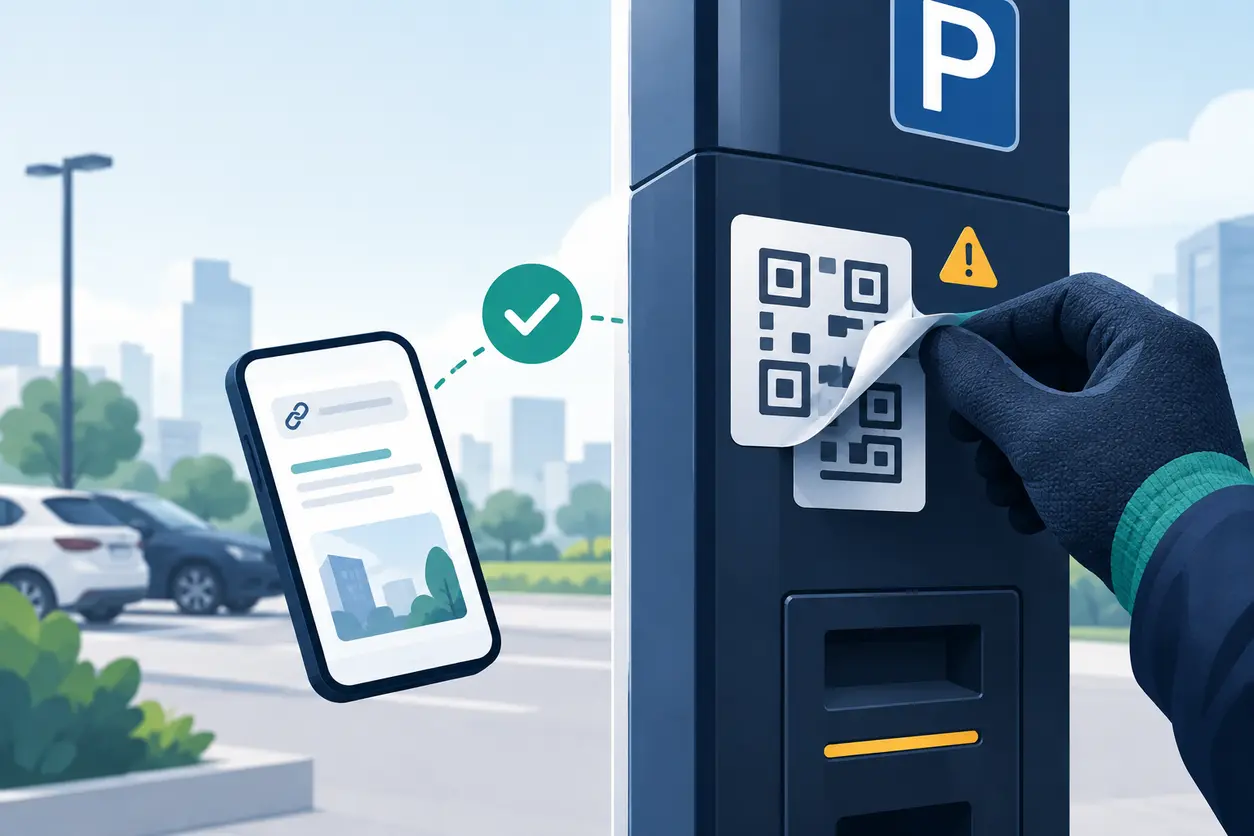
In the replacement-sticker scenario, an attacker does not need to change your original QR code or compromise your website. They cover the legitimate symbol with another one. A customer scans the visible code and follows the attacker’s destination instead of your authorized payment flow.
The FTC describes the parking-code replacement risk in its parking QR code alert. The broader danger is phishing: impersonation intended to obtain personal or financial information, as explained in the FTC’s phishing guidance.
For operators, distinguish three problems:
- Physical replacement: Someone covers or substitutes the printed code.
- Unauthorized redirect changes: Someone changes where your legitimate managed link sends visitors.
- Destination impersonation: A page imitates the operator or payment provider to solicit information.
These require different controls. Changing your legitimate redirect cannot repair a sticker that now points to an attacker-controlled address. Equally, replacing a damaged sign does not fix an unauthorized change inside your own redirect account.
Separate customer advice from operator responsibilities
Customers can inspect a sticker, preview a URL, and choose another payment method. They cannot maintain your signage inventory, approve your payment domains, or inspect every meter on the block.
Customer-facing advice should explain what to check and how to get help. Tell drivers the expected web address, how to find an independently verified payment route, and where to report a suspicious placement.
Operator controls should make those checks possible. Publish recognizable destinations, maintain physical signs, govern redirects, and give staff authority to take suspicious codes out of service.
Avoid making a warning sticker your entire security program. If a sign says “check the URL” but never states the expected address, it gives customers a task without a useful reference.
Build a register of every public QR placement
Start with a deployment register rather than a spreadsheet containing only campaign names. Field staff need to identify the exact surface they are checking.
For each placement, record:
- Asset ID and precise location, such as meter number, lot entrance, or kiosk face.
- Purpose: parking payment, directions, menu access, or another action.
- A baseline photograph showing the full sign and code position.
- The URL encoded in the approved QR artwork.
- Approved intermediate redirects and final destination.
- Expected payment provider and parking zone, where relevant.
- Sign material, installation date, and responsible owner.
- Latest inspection result and unresolved issues.
Use separate records when nearby placements have different parking zones or payment destinations. A code can reach a legitimate provider and still send the customer to the wrong location.
Keep approved artwork in a controlled folder. A replacement printed from an old email attachment may restore an obsolete link even when nobody is acting maliciously.
Make physical tampering easier to detect
Choose materials for the environment
Consider directly printed panels, recessed code placement, protective covers, or tamper-evident label materials where appropriate. Ask suppliers how proposed materials behave outdoors, during cleaning, and when someone attempts to remove or cover them.
Treat these as detection and maintenance choices, not guarantees. A durable sign can still have another sticker placed on top. A protective cover also needs inspection.
Keep the QR code’s surrounding clear space and contrast intact. Test the finished sign on multiple phones under realistic lighting and viewing distances before rollout.
Give inspectors a baseline
Physical inspections should compare the current surface with its approved photograph. Look for:
- Raised corners, bubbles, adhesive residue, or a second label edge.
- A code that is larger, smaller, or differently aligned than the approved artwork.
- Covered instructions, asset numbers, or printed destination text.
- Changes in finish, color, typography, or mounting position.
- New payment instructions attached beside an otherwise unchanged code.
Do not rely only on appearance. Include a controlled scan and destination check, because a neatly applied replacement may not be obvious.
Define who can replace a label
Only authorized staff or contractors should install approved replacement artwork. Log the asset, installer, reason, and replacement time, then take a new baseline photo.
Otherwise, legitimate maintenance can resemble tampering, and field teams may dismiss an unauthorized sticker as something another department installed.
Put recognizable destination text beside the code
Print a short, readable destination beside the symbol. Use an address your organization controls or an explicitly approved provider address, and state what the customer should expect after opening it.
Useful parking-sign information includes:
- Operator name and asset or zone identifier.
- Expected initial web address.
- Payment provider name if the flow moves to a separate provider.
- An independently accessible alternative payment route.
- A reporting phone number or short website path.
For example, a sign might explain that scanning opens the operator’s parking page before continuing to its named payment provider. This is a hypothetical layout, not a recommendation to add an unnecessary redirect.
Branding helps customers recognize the intended journey, but logos can be copied. The address, physical condition, and expected payment context matter together. Do not describe a branded code as authenticated merely because it carries your colors.
Govern branded domains and short links
A short address is useful only if someone remains responsible for it. Before putting a domain on long-lived parking signs, assign ownership for renewal, DNS changes, redirect configuration, and access removal when staff or vendors leave.
Use these governance rules:
- Maintain a list of approved domains and payment-provider destinations.
- Prefer organization-controlled links over employee-owned shortening accounts.
- Limit who can change public payment destinations.
- Use strong account protection, including multifactor authentication where available.
- Require an independent review for payment-route changes.
- Record the old destination, new destination, reason, approver, and test result.
- Review domain renewals and vendor handover arrangements before contracts end.
Avoid unnecessary redirect chains. Every intermediate service adds another destination to document, maintain, and explain.
Inspect the whole route, not just the first address displayed by a camera preview. A familiar initial link does not tell you whether its current redirect configuration is correct.
Use dynamic redirects for recovery, not as an anti-sticker shield
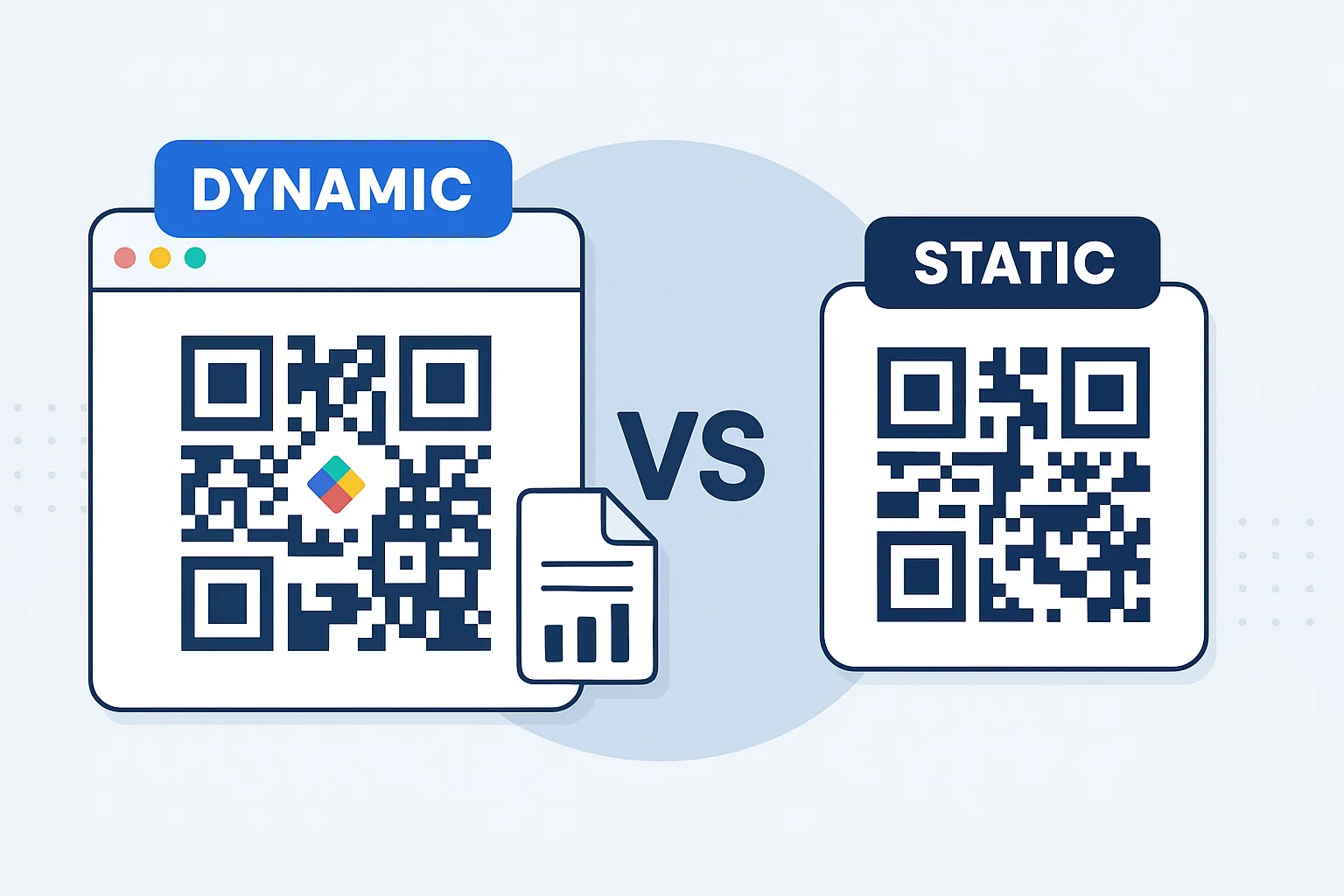
A static URL QR code contains a fixed address. A dynamic QR arrangement points through a managed redirect so the destination can change without replacing the printed symbol.
That flexibility can help when an authorized payment provider changes, a destination becomes unavailable, or legitimate scans need to reach a temporary service notice. It also means redirect access deserves careful control.
The important limitation is physical: a dynamic redirect cannot control a replacement sticker that encodes someone else’s URL. If an attacker covers your code, changing your own destination will not redirect people scanning the attacker’s sticker.
For QR Rapid users, plan code creation alongside the deployment register. Generate approved artwork, test the exact printed output, and retain its destination record. If your selected QR Rapid setup includes editable destinations, document who can update them and how changes are approved. Confirm any custom-domain or access-control requirements before choosing a deployment approach rather than assuming every feature is included.
Analytics, where available, are supporting evidence rather than a tamper alarm. Scans of an attacker’s replacement code may never reach your system. A change in legitimate scan activity should prompt investigation, not serve as proof of fraud.
Run repeatable physical and digital audits
Set an inspection cadence based on exposure, staffing, and the consequences of a misleading payment link. For example, a venue might inspect outdoor payment signs before opening, while a parking operator might integrate checks into an existing meter-service route. These are suggested operating patterns, not universal requirements.
Add extra checks after a tampering report, sign replacement, contractor visit, payment-provider change, or major event.
Field inspection checklist
- Confirm the asset ID and location against the register.
- Compare the entire sign with its baseline photo.
- Inspect label edges, covers, mounting points, and adjacent notices.
- Preview the QR destination using an approved work device.
- Open the route without entering payment or personal information.
- Confirm the redirect chain, operator identity, provider, and parking zone.
- Check that printed alternative payment and reporting details remain visible.
- Record the result, time, inspector, and any corrective action.
An unresolved mismatch should not be marked as passed simply because the page looks professional. Escalate it to the deployment owner.
Digital review checklist
Separately review approved redirect destinations, domain ownership, account access, and recent changes. Repeat this review after payment-provider migrations or staff departures.
Physical and digital inspections complement each other. Neither substitutes for the other.
Teach URL previews without creating false confidence
Customer education should be brief enough to use while someone is standing beside a meter.
Suggested wording for an operator’s parking information page:
Before opening a scanned link, compare its address with the expected address printed on our official signs. If the sticker appears altered or the address is unfamiliar, stop and use an independently verified payment option. Report the meter or sign number to our support team.
Explain that a camera preview may show the first destination, not every later redirect. Ask customers to check the browser address again before entering information. A padlock or HTTPS connection alone does not establish that the recipient is your authorized parking provider.
For a suspicious code, the fallback should not require scanning that same code. Offer a known app, manually entered official website, staffed payment point, or other supported method. Make clear which options actually exist at that location.
The FTC’s phishing guidance supports verifying requests through a contact route you know is genuine rather than relying on the suspicious message or link.
Give staff and customers a reporting route
Print a reporting contact outside the QR label area. Also publish it on your official parking information page so people can verify it independently.
Ask reporters for the asset number, location, approximate time, and a photo if safe to take. If they already opened the page, ask for the observed address without encouraging another visit.
Do not ask people to submit card numbers, passwords, or other sensitive information with a report. Customer-service staff should collect only what is needed to locate the asset and escalate the issue.
Train parking attendants, cleaners, restaurant hosts, security staff, and maintenance contractors on the same escalation procedure. A useful report may come from someone whose main job has nothing to do with QR codes.
Incident response: what to do when a code looks wrong
Contain the physical placement
Stop directing customers to the suspect code. Cover or take the affected sign out of service using an authorized notice, and provide a verified alternative payment route.
Photograph the sign and sticker before removal where practical. Preserve relevant details under your incident-handling process, but do not leave a suspected malicious code available merely to collect evidence.
Verify the scope
Compare the observed code with the approved artwork and destination record. Have the appropriate technical team examine suspicious destinations in a controlled environment; do not ask frontline staff to explore them on personal devices.
Inspect nearby meters, matching sign types, and other assets serviced on the same route. Check your legitimate redirects and account history as well. Do not assume every incident is purely physical.
Notify the right people
Escalate to operations, security or IT, customer support, and the payment provider as appropriate. Give customer-facing staff a consistent explanation of affected locations and verified payment alternatives.
If a customer entered sensitive information, direct them to their card issuer or account provider through a trusted channel. The FTC’s phishing guidance provides recovery and reporting advice. Have the appropriate team assess any notification obligations rather than promising that none apply.
Restore and verify
Install approved artwork, inspect surrounding surfaces, and test the complete payment journey. Confirm the correct zone, provider, and fallback instructions before reopening the placement.
Record what happened, what was replaced or changed, and who approved restoration. Review whether materials, inspection frequency, ownership, or reporting instructions need adjustment.
Put a maintained public-code workflow in place
Start with one parking area or group of unattended signs. Inventory every placement, establish baseline photos, verify the full destination route, and run the checklist with the people who will actually maintain it.
Use QR Rapid to create the approved QR artwork as part of that workflow—not as a substitute for it. Pair each code with readable destination text, an accountable owner, inspection records, and a tested fallback payment method.
The practical defense against a parking QR code scam is not a claim that a symbol is tamper-proof. It is an operating process that helps your team notice when the physical sign or digital journey no longer matches what you authorized.
FAQ
Can a dynamic QR code stop someone placing a scam sticker over a parking code?
No. A dynamic redirect manages the destination of your original code. A replacement sticker can encode an entirely different address, so physical inspection and removal are still necessary.
How often should parking operators inspect public QR codes?
Choose a cadence based on public exposure, staffing, and payment risk. Integrate checks into existing service rounds and add inspections after reports, sign work, provider changes, or major events. Document each result.
What should be printed beside a legitimate parking payment QR code?
Include the operator name, expected web address, asset or parking zone identifier, named payment provider where relevant, a verified alternative payment method, and a reporting contact outside the QR label.
Does a branded domain prove a parking QR code is legitimate?
No. A recognizable domain gives customers a useful reference, but branding can be copied and redirect settings can change. Check the exact address, physical sign condition, and expected payment journey together.
What should staff do first when they find a suspicious QR sticker?
Stop customers using the suspect placement, provide a verified payment alternative, and notify the responsible team. Photograph the sign where practical, then follow the authorized process for evidence preservation, removal, and replacement.
Similar Blogs
The latest industry news, interviews, technologies, and resources.
 August 7, 2026
QR Codes for Equipment Maintenance Logs: Scan-to-Report Inspections, Repairs, and Service History
QR Codes for Equipment Maintenance Logs: Scan-to-Report Inspections, Repairs, and Service History
Read post
Join 2,000+ subscribers
Stay in the loop with everything you need to know.
We care about your data in our privacy policy