
Dynamic QR Platform
Create QR codes Instantly
Website URL
Send users to any webpage
Website URL
Website URL
Send users to any webpage
Wi-Fi
Let users connect instantly
Wi-Fi
Wi-Fi
Let users connect instantly
Menu
Create a digital menu
Menu
Menu
Create a digital menu
Start a chat with one tap
Start a chat with one tap
Image
Showcase visuals
Image
Image
Showcase visuals
Show a downloadable file
Show a downloadable file
28 Nov 2025 • 8 min read
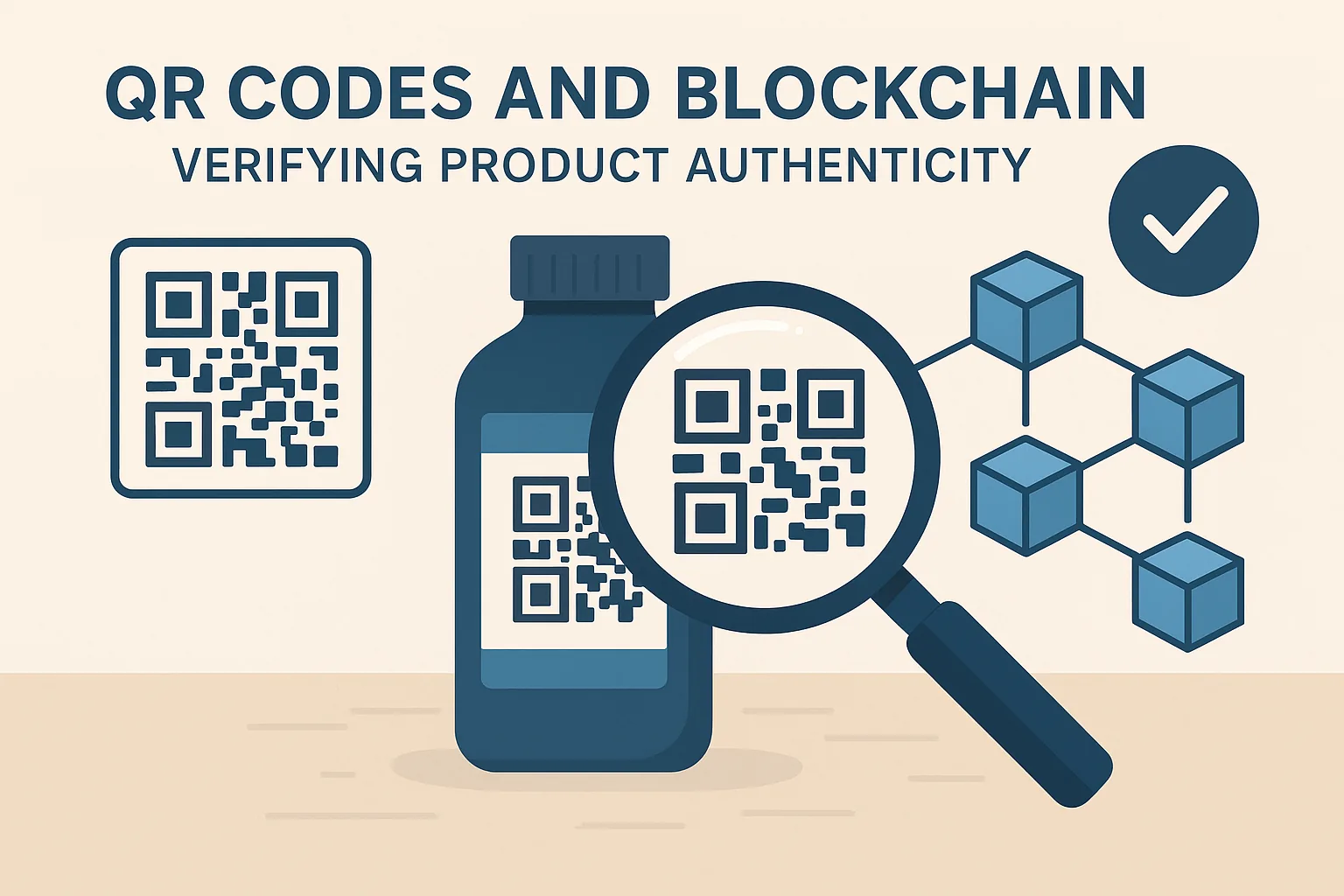
QR Codes and Blockchain: Verifying Product Authenticity
Learn how brands use this technology to protect customers.
Introduction1. Why Traditional Anti-Counterfeiting Methods Fail2. How QR Codes and Blockchain Work Together3. Industries Being Transformed4. Benefits Beyond Anti-Counterfeiting5. Implementation Considerations6. User Experience and Customer Education7. Challenges and Future DevelopmentsConclusion
Counterfeit products cost the global economy over $500 billion annually, damaging brands and putting consumers at risk. Traditional anti-counterfeiting measures like holograms and serial numbers can be replicated easily. The combination of QR codes and blockchain technology creates an unbreakable verification system that proves product authenticity instantly.
When QR codes link to blockchain records, each product receives a unique, tamper-proof digital identity. Customers scan a code and immediately verify they're purchasing genuine items, while brands gain complete supply chain visibility. This technology is transforming industries from luxury goods to pharmaceuticals, creating trust where counterfeits have thrived.
1. Why Traditional Anti-Counterfeiting Methods Fail
Legacy authentication approaches have significant weaknesses:
Holograms and Security Labels can be copied by sophisticated counterfeiters with similar printing technology.
Serial Numbers and Barcodes are easily duplicated. Counterfeiters simply copy legitimate numbers onto fake products.
RFID Tags remain expensive and can be cloned with specialized equipment.
Certificates of Authenticity are paper-based and easily forged.
These methods rely on physical features that can be replicated or centralized databases that can be manipulated. Blockchain solves both issues by creating immutable, decentralized records that cannot be altered after creation.
2. How QR Codes and Blockchain Work Together
The Authentication Process:
Manufacturing - When a product is created, a unique blockchain record is generated with production details. A QR code linked to this record is attached to the product.
Distribution - As the product moves through supply chains, each transfer is recorded on the blockchain. Distributors scan the QR code to confirm legitimacy.
Consumer Verification - Customers scan the QR code using their smartphone. The app queries the blockchain and displays the complete product history, proving authenticity instantly.
Counterfeit Detection - If someone copies the QR code, the blockchain shows the legitimate product is elsewhere, flagging the copy as fake.
This process mirrors security principles discussed in Can QR Codes Be Hacked? Myths vs. Facts, where immutable records create trustworthy systems.
3. Industries Being Transformed
Luxury Fashion and Accessories
High-end brands use blockchain QR codes to let customers verify authenticity before purchase. Each item receives a digital certificate stored permanently on the blockchain.
Pharmaceuticals and Medical Devices
Counterfeit medications kill hundreds of thousands annually. Blockchain verification ensures patients receive genuine, safe products by tracking from manufacturing to pharmacy.
Food and Agriculture
QR codes linked to blockchain allow customers to trace products to specific farms, verify organic claims, and confirm ethical sourcing. This builds on concepts in QR Codes and Sustainability.
Electronics and Technology
Blockchain QR verification prevents counterfeit chips, batteries, and accessories from entering supply chains, protecting consumers from dangerous fake products.
Wine and Spirits
Blockchain verification proves bottle authenticity, vintage accuracy, and proper storage conditions. Collectors and restaurants purchase with confidence.
Automotive Parts
Counterfeit components cause accidents. Blockchain QR systems verify parts authenticity, ensuring mechanics install safe, manufacturer-approved components.
4. Benefits Beyond Anti-Counterfeiting
Complete Supply Chain Visibility
Brands gain real-time insights into product movement, identifying bottlenecks and unauthorized distribution channels.
Warranty and Recall Management
When products are registered via blockchain QR scans, brands maintain direct customer relationships. This enables targeted recalls and automatic warranty registration.
Enhanced Customer Engagement
Scanning authentication QR codes creates opportunities to deliver product care instructions, usage tips, or loyalty program enrollment. This transforms security into a marketing touchpoint.
Regulatory Compliance
Industries with strict traceability requirements benefit from automatic audit trails. Every transaction is permanently recorded, simplifying compliance reporting.
5. Implementation Considerations
Technical Requirements:
Blockchain Selection - Choose between public blockchains (Ethereum, Polygon) for transparency or private blockchains for controlled access.
QR Code Generation - Create unique codes for each product. Dynamic QR codes work well as they allow updating information without changing the physical code, especially when you need a multi-link QR code for different verification or support destinations.
Mobile Application - Develop apps that scan codes and query blockchain records with simple user experiences.
Integration Systems - Connect manufacturing systems and distribution networks to automatically update blockchain records.
Operational Considerations:
Partner Onboarding - Distributors and retailers need training on scanning products at each transfer point.
Cost Structure - Blockchain transaction fees, QR code printing, and system maintenance create ongoing costs.
Scalability Planning - Systems must handle peak production volumes and global distribution without delays.
6. User Experience and Customer Education
For blockchain QR verification to succeed, customers must understand how to use it and trust the results.
Design Principles:
Simple Scanning - Users should scan and immediately see clear verification results without requiring blockchain knowledge.
Clear Visual Indicators - Use green checkmarks for authentic products and red warnings for potential counterfeits.
Transparency Without Complexity - Show relevant supply chain information while hiding technical blockchain details.
Following QR code placement strategies ensures codes are positioned where customers naturally look during purchases.
Building Trust:
Educational Marketing - Explain why blockchain verification matters and how it protects customers.
Brand Consistency - Verification interfaces should match overall brand aesthetics.
Third-Party Validation - Partner with recognized certification bodies to audit your blockchain implementation.
Addressing concerns in How to Spot & Avoid Malicious QR Codes helps customers understand legitimate verification QR codes.
7. Challenges and Future Developments
Current Challenges:
Consumer Adoption - Many customers don't yet understand blockchain. Education and marketing are critical.
Cost Barriers - Small businesses may struggle with implementation costs, though cloud-based solutions are reducing expenses.
Physical Tampering - Solutions include tamper-evident labels and integrating codes into products themselves.
Network Connectivity - Verification requires internet access. Offline verification methods are being developed.
Emerging Innovations:
AI-Enhanced Verification - Combining blockchain with computer vision verifies both digital records and physical product characteristics.
NFC Integration - Adding near-field communication chips alongside QR codes provides additional security. Learn more in QR Codes vs. NFC.
Cross-Brand Standards - Industry consortiums are developing common blockchain standards for verification across multiple brands.
Insights from How AI Is Revolutionizing QR Code Campaigns suggest machine learning will further enhance verification accuracy.
Conclusion
The combination of QR codes and blockchain creates an authentication system that gives brands and consumers a reliable way to fight counterfeits. By storing immutable product records on decentralized ledgers and making them accessible through smartphone scans, this approach transforms product verification from a complex challenge into an instant, trustworthy process.
Industries from luxury fashion to pharmaceuticals are implementing blockchain QR verification, protecting brand integrity while building customer trust. As technology matures and costs decrease, adoption will expand across sectors where authenticity matters.
Ready to protect your products with blockchain-verified QR codes? Create your authentication system with QRRapid.com today and give your customers the confidence they deserve.
Similar Blogs
The latest industry news, interviews, technologies, and resources.
 September 2, 2025
QR Codes and Sustainability: How Going Paperless Helps the Planet
QR Codes and Sustainability: How Going Paperless Helps the Planet
Read post
Join 2,000+ subscribers
Stay in the loop with everything you need to know.
We care about your data in our privacy policy