
Dynamic QR Platform
Create QR codes Instantly
Website URL
Send users to any webpage
Website URL
Website URL
Send users to any webpage
Wi-Fi
Let users connect instantly
Wi-Fi
Wi-Fi
Let users connect instantly
Menu
Create a digital menu
Menu
Menu
Create a digital menu
Start a chat with one tap
Start a chat with one tap
Image
Showcase visuals
Image
Image
Showcase visuals
Show a downloadable file
Show a downloadable file
08 Dec 2025 • 15 min read
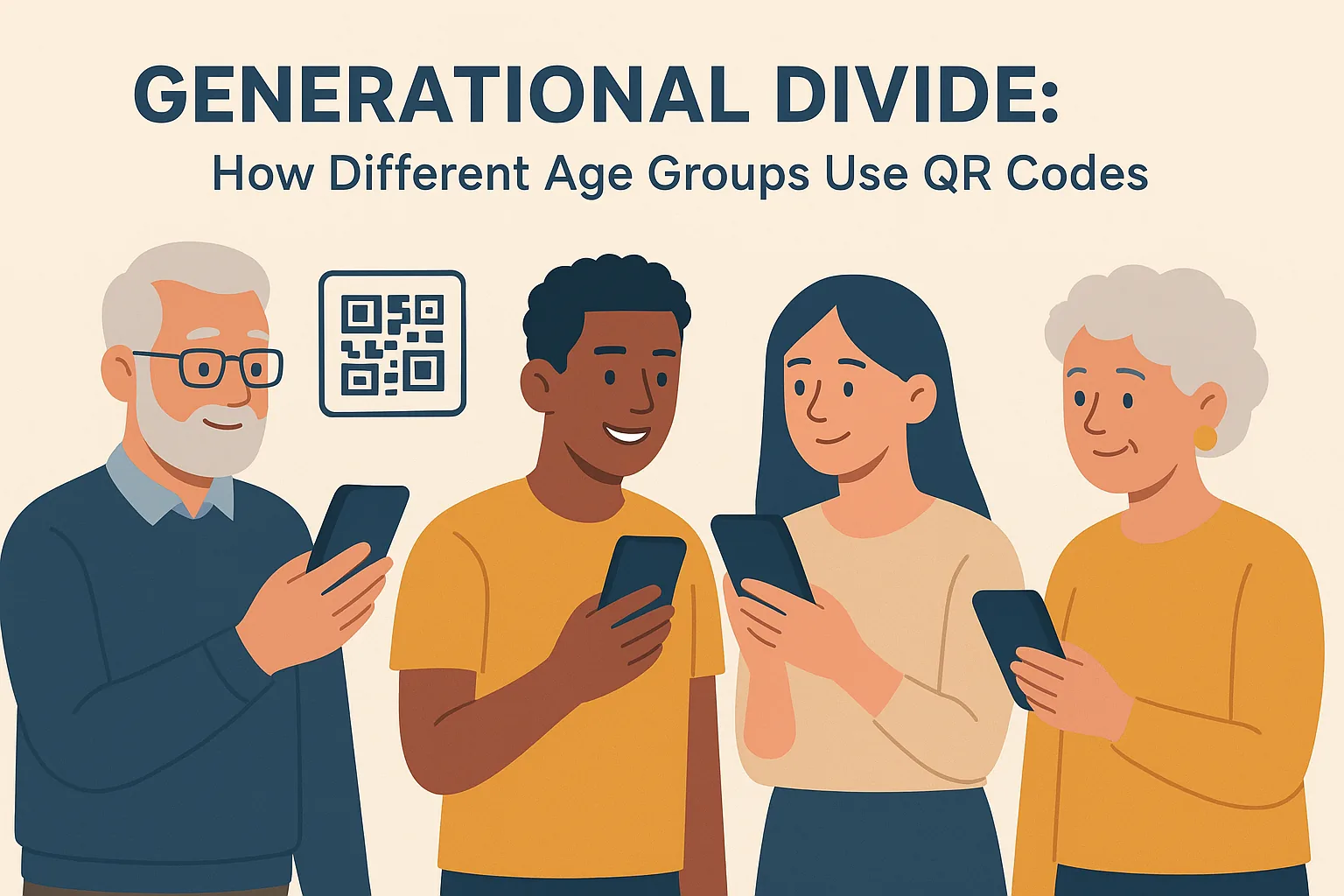
Generational Divide: How Different Age Groups Use QR Codes
This article explains how people from different generations use QR codes in daily life. It highlights key differences in habits and preferences.
Introduction1. Gen Z (Born 1997-2012): Digital Natives Leading Adoption2. Millennials (Born 1981-1996): Tech-Savvy Pragmatists3. Gen X (Born 1965-1980): Cautious but Growing Users4. Baby Boomers (Born 1946-1964): Emerging Adopters5. Gender Differences Across Generations6. Designing Multi-Generational QR Code Campaigns7. Future Trends in Generational AdoptionConclusion
QR codes have become ubiquitous in modern life, but not everyone interacts with them the same way. Age plays a significant role in how people discover, scan, and trust these digital shortcuts. Understanding these generational differences is crucial for businesses designing effective QR code campaigns that resonate with their target audiences.
Recent data shows that 99.5 million Americans are expected to scan QR codes by 2025, with 84% of mobile users having scanned at least once. However, usage patterns vary dramatically across age groups. While 54% of 18-29 year olds actively scan marketing QR codes, only 31% of those 65 and older do the same. These differences aren't just about technology adoption but reflect deeper patterns in how generations approach digital tools, trust, and convenience.
1. Gen Z (Born 1997-2012): Digital Natives Leading Adoption
Gen Z grew up with smartphones as an essential part of daily life. For this generation, QR codes feel natural rather than novel.
Usage Patterns:
Gen Z users aged 18-29 show the highest engagement, with 54% scanning marketing QR codes regularly. They scan codes without hesitation, viewing them as standard parts of modern experiences. This generation expects instant digital access and becomes frustrated with manual processes that QR codes eliminate.
Preferred Use Cases:
- Social media connections and following brands
- Accessing exclusive content and behind-the-scenes material
- Mobile payments and digital wallets
- Event check-ins and ticket validation
- Product information and reviews before purchasing
Gen Z treats QR codes as gateways to experiences rather than just information sources. They're comfortable scanning codes in public spaces, on packaging, in advertisements, and even on screens. This behavior aligns with insights from The Psychology of Scanning, where younger users associate QR codes with convenience and instant gratification.
Marketing Implications:
Campaigns targeting Gen Z should emphasize speed, exclusivity, and social connectivity. Video QR codes and social media QR code perform exceptionally well with this demographic.
2. Millennials (Born 1981-1996): Tech-Savvy Pragmatists
Millennials bridge traditional and digital worlds, having adopted smartphones during young adulthood. They represent the largest segment of QR code users, with 68% of all scans coming from people aged 24-54.
Usage Patterns:
Among 30-44 year olds, 47% used marketing QR codes in the last three months. Millennials scan when they see clear value: discounts, convenience, or access to useful information. Unlike Gen Z, who scan exploratorily, Millennials are more purposeful and evaluate whether scanning is worth their time.
Preferred Use Cases:
- Restaurant menus and ordering systems
- Loyalty programs and rewards
- Product comparison and price checking
- Payment systems and contactless transactions
- Professional networking and business contacts
Millennials drive significant adoption in practical applications. The pandemic accelerated their comfort with menu QR codes in restaurants, and many now prefer digital menus even when physical options exist. They appreciate QR codes that save time or money but ignore those that seem gimmicky.
Marketing Implications:
Focus on utility and value proposition. Millennials respond well to coupon QR codes and loyalty program integrations. Clear calls-to-action explaining what they'll receive after scanning increase engagement rates significantly.
3. Gen X (Born 1965-1980): Cautious but Growing Users
Gen X adopted technology during their careers and approach QR codes with measured enthusiasm. Data shows 44% of 45-64 year olds used marketing QR codes in recent months, indicating solid but not leading adoption.
Usage Patterns:
Gen X scans selectively, often after observing others do so first or when trusted brands present codes. Among 55-64 year olds specifically, 42.5% of males and 35.2% of females use QR codes, showing moderate gender differences in this age group.
Preferred Use Cases:
- Banking and financial transactions
- Healthcare appointments and medical records
- Retail store promotions from familiar brands
- Event tickets for concerts or travel
- Product warranty registration and support
Gen X values security and privacy highly. They're more likely to scan codes from established brands they already trust than from new companies or unfamiliar sources. Concerns addressed in Can QR Codes Be Hacked? Myths vs. Facts resonate particularly with this demographic.
Marketing Implications:
Build trust before asking for scans. Include your brand logo prominently, explain what the QR code does, and place codes in contexts where Gen X already engages with your brand. Security messaging and privacy assurances increase scan rates.
4. Baby Boomers (Born 1946-1964): Emerging Adopters
Baby Boomers represent the fastest-growing segment of QR code users, though overall adoption remains lower than younger generations. Only 31% of those 65 and older use QR codes, but this number is rising as the technology becomes more familiar.
Usage Patterns:
Boomers often learned to scan QR codes out of necessity during the pandemic when restaurants switched to digital-only menus. Many initially found the process frustrating but have become more comfortable with repeated exposure. However, 64% of those 45 and older (compared to 82% of 18-44 year olds) believe QR codes will become permanent, showing some skepticism about long-term adoption.
Preferred Use Cases:
- Healthcare portals and vaccination records
- Banking and financial account access
- Government services and official documentation
- Retail product information and instructions
- Restaurant menus (when no alternative exists)
Baby Boomers prefer QR codes that solve clear problems or provide access to services they already use. They're less likely to scan exploratory codes and more likely to need assistance the first few times they encounter the technology.
Barriers to Adoption:
- Unfamiliarity with smartphone camera functions
- Concerns about security and privacy
- Difficulty seeing small codes or scanning in poor lighting
- Preference for traditional alternatives when available
- Distrust of technology from unfamiliar sources
Marketing Implications:
Provide clear instructions near QR codes. Phrases like "Open your camera and point it at the square" work better than assuming knowledge. Always offer alternative access methods (website URLs, phone numbers) alongside QR codes. Consider QR code accessibility principles to ensure codes work for users with vision or dexterity challenges.
5. Gender Differences Across Generations
Beyond age, gender influences QR code adoption patterns, though differences are narrowing.
Current Statistics:
- Women 25-34: 46.3% use QR codes monthly
- Men 25-34: 45.8% use QR codes monthly
- Overall: 57% female users, 43% male users (2021 data)
The near-parity among younger users suggests gender differences are largely generational rather than inherent. Older demographics show more significant gaps, with men 55-64 adopting at 42.5% versus women at 35.2%.
Context Matters:
Gender differences appear more in certain contexts. Women show higher QR code usage in retail and shopping environments, while men show higher adoption in technology and automotive settings. These patterns likely reflect broader consumer behavior trends rather than fundamental preferences.
6. Designing Multi-Generational QR Code Campaigns
Successfully reaching diverse age groups requires thoughtful strategy that accommodates different comfort levels and expectations.
Universal Best Practices:
Clear Value Proposition - Regardless of age, users scan when benefits are obvious. State what scanning delivers: "Scan for 20% off," "View the full menu," "Get instant support."
Trust Signals - Include brand logos, official domains visible near codes, and context that confirms legitimacy. Following QR code placement strategies builds confidence across all ages.
Size and Contrast - Larger codes with high contrast work better for older users while remaining perfectly functional for younger ones. Design for the least tech-savvy users, and everyone benefits.
Alternative Access - Always provide traditional options alongside QR codes. Print URLs, phone numbers, or offer physical menus. This respects user preferences and prevents excluding anyone.
Simple Landing Pages - After scanning, users should reach fast-loading, mobile-optimized pages with clear next steps. Complexity after scanning frustrates all age groups.
Generation-Specific Tactics:
For Gen Z and Millennials - Emphasize exclusivity, social sharing, and mobile-first experiences. Use dynamic content and integrate with apps they already use.
For Gen X - Focus on practicality, security, and clear benefits. Leverage existing brand relationships and provide detailed explanations of what data is collected.
For Baby Boomers - Offer instructions, maintain traditional alternatives, and emphasize trustworthy contexts like healthcare or banking where QR codes solve real problems.
7. Future Trends in Generational Adoption
QR code usage patterns will continue evolving as technology becomes more embedded in daily life and older generations gain experience.
Predicted Changes:
Rising Boomer Adoption - As Boomers encounter QR codes in essential services (healthcare, government), familiarity will increase. The 31% current usage among 65+ will likely rise to match Gen X levels within 5 years.
Gen Z Setting Standards - As Gen Z enters peak earning and spending years, their expectations for instant digital access will push businesses toward QR-first strategies. Traditional alternatives may become secondary rather than equal options.
Technology Evolution - Improvements in accessibility features, better smartphone cameras, and AR integration will reduce barriers for older users. AI-powered assistance may guide first-time scanners through the process.
Cross-Generational Normalization - As discussed in How QR Codes Are Reshaping Human Behavior, the technology is becoming as normal as using a credit card, reducing age-based resistance.
Conclusion
The generational divide in QR code usage reflects broader patterns in technology adoption, trust, and digital comfort. While 84% of mobile users have scanned at least once, the frequency and context vary dramatically by age. Gen Z leads with 54% scanning marketing codes regularly, while Baby Boomers at 31% show growing but cautious adoption.
Understanding these differences allows businesses to design campaigns that resonate across demographics. The key is balancing innovation for younger audiences with accessibility and trust-building for older ones. As 99.5 million Americans embrace QR codes by 2025, successful strategies will meet users where they are rather than expecting uniform behavior across age groups.
Ready to create QR codes that work for every generation? Start with QRRapid.com and design campaigns that bridge the generational divide while delivering value to all users.
Similar Blogs
The latest industry news, interviews, technologies, and resources.

Join 2,000+ subscribers
Stay in the loop with everything you need to know.
We care about your data in our privacy policy