QR Rapid
Best QR Code Generator
Create QR codes Instantly
Website URL
Send users to any webpage
Website URL
Website URL
Send users to any webpage
Wi-Fi
Let users connect instantly
Wi-Fi
Wi-Fi
Let users connect instantly
Menu
Create a digital menu
Menu
Menu
Create a digital menu
Start a chat with one tap
Start a chat with one tap
Image
Showcase visuals
Image
Image
Showcase visuals
Show a downloadable file
Show a downloadable file
13 Jun 2026 • 10 min read
QR Codes for Real Estate Open Houses and Property Flyers
A practical guide for agents and brokers using real estate QR codes on open house signs, yard signs, flyers, and brochures to drive more scans, inquiries, and showing requests.
IntroductionWhy real estate QR codes matter in property marketingWhere to use real estate QR codesWhat your QR code should link toStatic vs dynamic QR codes for real estateA practical setup for better attribution
Real estate marketing still depends heavily on printed materials. Yard signs, brochure boxes, listing flyers, window displays, and open house handouts all do one job well: they put a property in front of a buyer at the exact moment of interest.
The problem is that print often stops where buyer intent starts. A passerby wants photos, price details, showing options, or the agent’s contact page right away. If they have to type a long URL, search for the listing, or save a phone number for later, a large share of that intent disappears.
That is exactly where real estate QR codes work best.
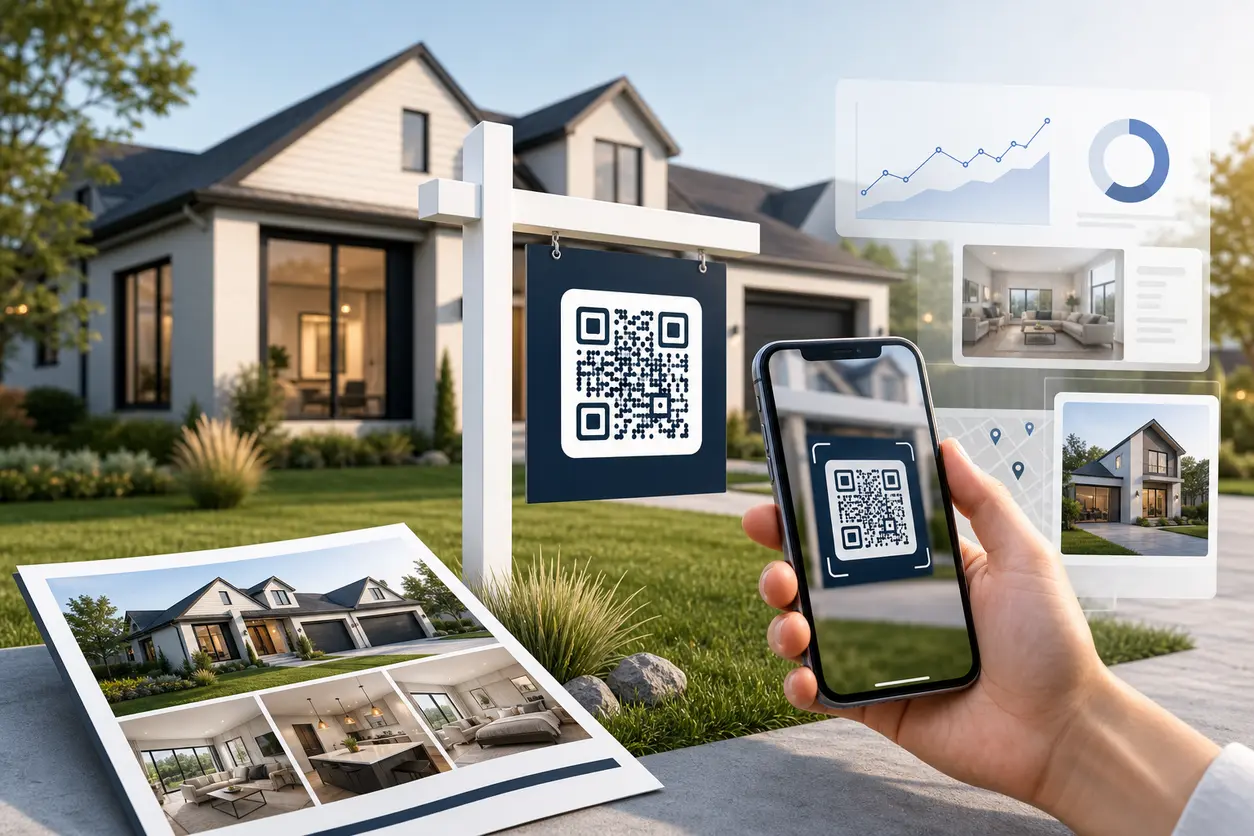
Used well, a QR code turns every printed touchpoint into a mobile-first property experience. One scan can send buyers from a yard sign to a gallery, from a flyer to a virtual tour, or from an open house handout to a request-a-showing form. For agents and brokers, the bigger advantage is not just convenience. It is control. With dynamic QR codes, you can update destinations without reprinting materials and track which properties and placements actually produce engagement.
Why real estate QR codes matter in property marketing
Real estate is a high-intent, low-attention business. Buyers often discover homes while driving, walking neighborhoods, attending open houses, or picking up flyers on the go. In those moments, speed matters more than perfect branding language.
A good real estate QR code setup helps you:
- capture interest while the buyer is physically at the property
- shorten the path from sign to inquiry
- connect print marketing to digital listing content
- reduce friction for showing requests
- measure which listings and placements generate scans
- update live campaigns when price, availability, or open house details change
Many agents use QR codes only for virtual tours. That is useful, but it misses the full workflow. A better setup connects curb appeal, listing details, contact, and lead capture in one system.
Where to use real estate QR codes
The best-performing QR code strategy usually covers multiple printed assets, not just one.
Yard signs
A yard sign catches buyers at the curb. That scan should go to the fastest possible next step, not a generic homepage.
Best destinations for yard sign QR codes:
- mobile listing page with photos, price, and key specs
- gallery-first landing page for visual browsing
- virtual tour for high-interest buyers
- request-a-showing form for serious prospects
- agent contact page with tap-to-call and text options
For active listings, a dynamic QR code is especially useful here. If the home goes under contract, you can change the destination to:
- an updated listing status page
- a backup property in the same area
- a buyer inquiry form for similar homes
- the agent’s broader listings page
That means the printed sign keeps working instead of becoming dead inventory.
Open house signs
Directional signs and entry signage can do more than guide traffic. They can also help qualify interest.
Useful open house QR code destinations include:
- today’s open house details and hours
- a digital sign-in page
- a property fact sheet
- financing or neighborhood information
- a follow-up form for private showings
One practical approach is to use one QR code outside the property and another inside. The outside code can focus on fast property access. The inside code can focus on lead capture and next steps after the walk-through.
Listing flyers
Flyers are often taken home, shared, or photographed. A flyer QR code should expand what the paper cannot hold.
Good flyer destinations:
- full image gallery
- video walkthrough
- downloadable brochure or feature sheet
- school, commute, or neighborhood map page
- booking form for a second showing
This is where QR Rapid is useful because you can link a flyer to a dynamic destination and update it as the listing evolves. If the property gets a price change or new photos, the printed flyer does not need to become outdated immediately.
Property brochures and mailers
Higher-end listings and new developments often rely on printed brochures, direct mail pieces, or window displays. These are ideal for QR codes because space is limited and buyer intent is already warm.
A brochure QR code can point to:
- a polished listing landing page
- a branded gallery or file share
- a schedule-a-tour form
- a development availability page
- a contact page for the listing agent or team
For multi-unit or new-build marketing, dynamic QR codes are especially valuable because inventory changes fast.
What your QR code should link to
Not every printed asset should go to the same destination. The best real estate QR codes match the context of the scan.
1. Photo gallery
If the property has strong visuals, a gallery-first experience usually gets the best engagement from yard signs and flyers. The buyer scans because they want to see more.
2. Virtual tour
A virtual tour works well for remote buyers, luxury listings, and properties where layout sells the home better than a static flyer can.
3. Listing details page
This is often the best default destination. It should include price, beds, baths, square footage, property highlights, and a clear next step.
4. Agent contact page
For some placements, especially open house materials, direct contact may convert better than sending buyers through a full listing flow. A page with tap-to-call, text, and email options can reduce drop-off.
5. Request-a-showing form
This is the most conversion-focused destination. It works best when the buyer has already seen the property or flyer and is ready to take action.
A smart strategy is to use different QR codes for different placements, even when they all relate to the same listing. That gives you clearer attribution.
Static vs dynamic QR codes for real estate
Static QR codes are fine if the destination will never change. That is rarely true in real estate.
Listings change constantly:
- open house times move
- price reductions happen
- photos are refreshed
- homes go pending
- landing pages change
- teams want to redirect traffic to alternative listings
Dynamic QR codes are usually the better choice because they let you change the destination after printing. That is one of the biggest reasons agents use QR Rapid for property marketing. For more on why flexibility matters, see Dynamic vs Static QR Codes | Why Choose Dynamic for Business.
With QR Rapid, a dynamic real estate QR code helps you:
- keep yard signs usable after listing updates
- swap a flyer destination without reprinting boxes of materials
- redirect traffic when a property is no longer available
- reuse campaign structures across multiple listings
- track scans by property and placement
For brokerages and teams, this flexibility matters even more. Instead of treating every code as a one-time asset, you can manage codes as part of a repeatable listing workflow.
A practical setup for better attribution
If you want more than scans, you need structure.
A strong real estate QR code workflow often looks like this:
Create separate codes by placement
For one property, use different dynamic QR codes for:
- yard sign
- flyer box flyer
- open house entrance sign
- printed brochure
- office window display
All of them may point to similar content, but they should remain separate for tracking. That way you can see whether curbside scans outperform take-home flyers, or whether open house handouts are creating the most showing requests.
Use destination pages that match buyer intent
Similar Blogs
The latest industry news, interviews, technologies, and resources.
Video QR Codes: Captivate Viewers & Deliver Dynamic Content Fast
Video QR Codes: Captivate Viewers & Deliver Dynamic Content Fast
Read post
QR Code Placement Strategies: Where to Put Them for Maximum Scans
QR Code Placement Strategies: Where to Put Them for Maximum Scans
Read post
Join 2,000+ subscribers
Stay in the loop with everything you need to know.
We care about your data in our privacy policy